
How Fast Turn Printed Circuit Board Assembly Can Be Used in Consumer Electronic Devices

Fast Turn Printed Circuit Board Assembly
There is no doubt that the electronics manufacturing industry embodies the business cliche that “Time is Money”. In an ever-competitive landscape, it can mean the difference between success and failure for new products. This is especially true for consumer electronic devices where fast product development and release is paramount for attracting consumers. One of the best ways to cut production time and improve market competitiveness is to utilize rapid prototyping and assembly methods. Fast turn PCB assembly offers a way to do this without the cost and risk of committing to a full production run.
Whether you are a start-up in the wearable tech space or an established medical device manufacturer, fast turn printed circuit board assembly can help your company improve market competitiveness by shortening the development cycle for new products. This process allows you to tweak product designs in response to beta tester feedback, enabling you to be first to market with an innovative technology that will attract customers.
The process begins with the bare fast turn printed circuit board assembly being fabricated based on the design files you provide. Copper tracks are routed to connect signals, and solder mask is applied to protect the copper from oxidation. A metal stencil is created with cutouts matching the locations of the solder pads on the PCB. During assembly, solder paste is applied to the pads and the components are placed accurately on the board. The resulting board passes through a reflow oven to melt the solder and bond the parts to the pads. Then, the assembly is inspected and cleaned to remove any excess solder.
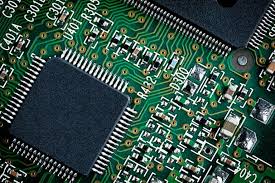
How Fast Turn Printed Circuit Board Assembly Can Be Used in Consumer Electronic Devices
For a quick turn, the minimum turnaround time for PCB assembly is 24 hours for rigid or flex PCBs and 7 days for HDI or high density BGAs. However, it is possible to reduce the lead time with smart trade-offs like reducing complexity of the PCB, utilizing standard component sizes and footprints, using widely available components, minimizing the number of BOM line items, eliminating connectors, and following Design for Manufacturability guidelines.
As with any manufacturing process, quality is important, and choosing the right PCB manufacturer can make or break your project. Many companies claim to be able to offer fast turnarounds, but they often cannot deliver on this promise. The best manufacturers can handle surface finishes such as HASL, ENEPIG, or hard gold in-house, and have the capacity to produce large quantities of circuit boards quickly. They should also have an extensive supply chain to ensure that the components specified in the Bill of Materials are available.
Lastly, choose a manufacturer that has all processes under one roof to ensure streamlined delivery and better quality control. This is especially crucial for a fast-turn order, as it can be difficult to predict how complex the circuit board will be. Also, if your PCB has thru-hole components, make sure the data you provide includes a pick and place file with a matching Gerber file, as well as a DO NOT POPULATE (DNP) column for those parts that don’t need to be soldered.