
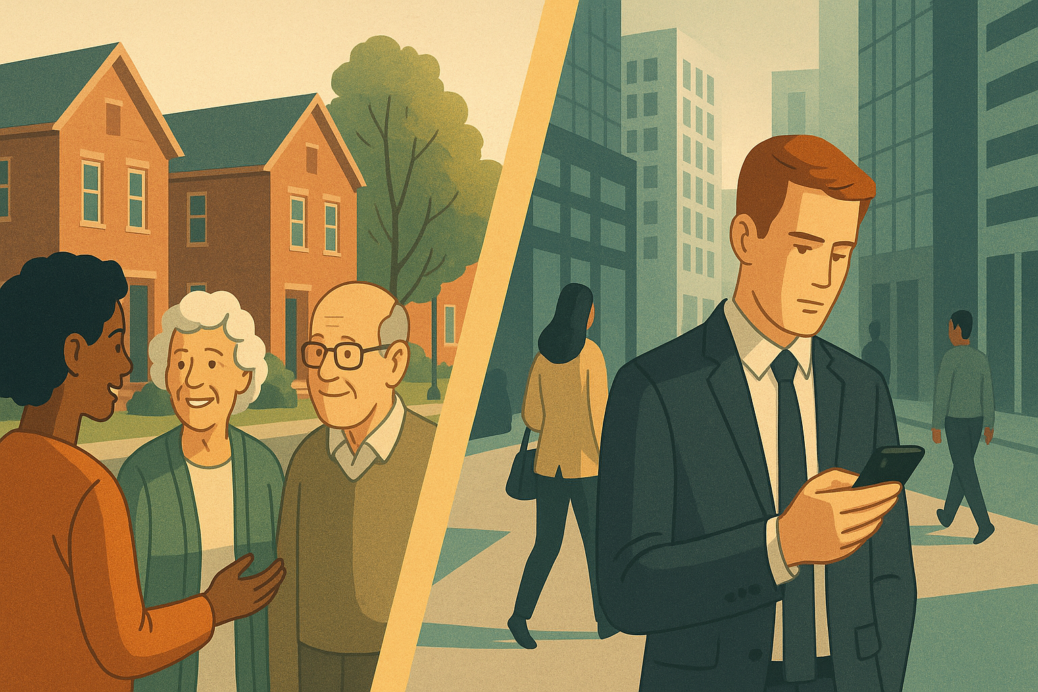
Are We Losing the Neighbourhood Vibe? Why Changing Social Ties Matter for Property Investors

Key takeaways
72% of Australians believe people are less interested in knowing their neighbours than 20 years ago.
62% admit to living next to someone for over 6 months without ever meeting them.
Those in regional, rural, or remote areas are more likely to know all their neighbours’ names (32%) compared to city dwellers (24%).
The Mid North Coast of NSW is the friendliest region, with 43% knowing all their neighbours’ names.
Latrobe (VIC) and Outer Southwest Sydney were rated most family-friendly.
Neighbourhood character matters: Friendly, family-oriented suburbs still hold premium value and appeal.
Liveability isn’t just about infrastructure — community cohesion plays a critical role.
High-conflict zones or disconnected areas may face lower demand and reduced growth potential.
Once upon a time, Australians would chat over the fence, borrow sugar from their neighbours without hesitation, and keep an eye out for each other’s kids.
But according to the Real Neighbours Report 2025, those days may be numbered, and as property investors, we’d be unwise to ignore the implications.
We’ve often talked about the intangible value of a neighbourhood, the community vibe, the safety, the feeling of “home.”
Well, those social threads are starting to fray, especially among younger Australians.
The question is: what does this mean for liveability, desirability, and long-term capital growth?
Australians are becoming less neighbourly, and the numbers are stark
This latest report, based on a national survey of over 5,000 Australians, confirms what many of us have sensed anecdotally – we’re becoming less connected to the people next door.
-
62% of Australians admit to living next to someone for over six months without meeting them.
-
For Gen Z and Gen Y, that figure jumps to over 70%.
-
And 72% of respondents believe we’re less interested in knowing our neighbours than we were two decades ago.
You might be tempted to shrug this off as a cultural shift, but as I see it, this erosion of local social capital could signal deeper changes in the types of locations people choose to live in and invest in.
The most (and least) neighbourly places in Australia
Of course. not all areas are created equal when it comes to community cohesion.
-
Regional and rural communities still lead the way, with 32% of locals knowing all their neighbours’ names, compared to just 24% in metro areas.
-
The Mid North Coast of NSW topped the nation for friendliness, while Latrobe and Sydney’s Outer Southwest ranked as the most child- and family-friendly zones.
-
On the flip side, Melbourne’s inner suburbs and Brisbane’s north saw the lowest rates of basic neighbourly interaction like greetings.
This matters because neighbourhood character is increasingly becoming a factor in homebuyer and renter decisions, especially among families and downsizers.
People are craving safety, connection, and familiarity, and they’ll pay a premium for it, both as owner occupies and as tenants.
Generational shift: Boomers still value the front fence chat
The report also highlights a generational divide in how Australians engage with their neighbours:
-
Only 18% of Gen Z see knowing their neighbours as “very important,” compared to 36% of Baby Boomers.
-
73% of Boomers always greet neighbours, while only 30% of Gen Z do the same.
-
Boomers are far more likely to lend a hand (or a cup of sugar), while younger Australians prefer digital channels or formal community events to build relationships.
So what’s happening here? Is the neighbourhood dying?
Well… not quite, it’s just evolving.
Younger people are still seeking connection, but they’re looking online.
Community is being built in Facebook groups, Discord servers, and WhatsApp chats. The front fence has gone digital.
That has implications for how we evaluate “desirable” neighbourhoods.
It’s no longer just about walkability or cafes; now it’s also about connectivity, both online and offline.


Are you thinking of upgrading your home in near future?
Metropole has been helping Australians by their next home for over 30 years.
Trust our unrivaled and proven experience.
The rise of passive-aggressive neighbourhoods: a warning sign?
Interestingly, the report also uncovers a spike in friction between neighbours:
-
26% of Australians have received passive-aggressive messages from neighbours.
-
37% feel their privacy has been invaded — with concerns over surveillance cameras, boundary issues, and even eavesdropping.
-
Alarmingly, 1 in 5 people have considered moving due to neighbour conflicts. Among Gen Y, that figure hits 41%.
This is more than just juicy backyard gossip. I see it as a red flag.
Neighbourhood tensions, whether from noise complaints or disputes over fences, affect liveability.
And that directly impacts rental demand, tenant satisfaction, and long-term value.
What this means for property investors
There are a few clear takeaways here if you’re investing for the long term:
1. Don’t underestimate the power of community
Suburbs with a strong sense of community often have more stable tenancies, lower turnover, and better capital growth.
These are the “sticky” suburbs people don’t want to leave, and that’s worth its weight in gold.
2. Choose neighbourhoods, not just properties
Once you’ve chosen the right suburb, it’s also important to find the right street and neighbourhood where you invest.
Proximity to parks, schools, and local events still draws people in, but increasingly, online community groups and local digital engagement are shaping suburban sentiment.
Look for areas with high local involvement, both physical and virtual.
3. Be aware of the red flags
High levels of noise complaints, privacy issues, and neighbourhood disputes can depress property values over time.
Before you buy, you can just dig deeper into the local culture. Are people connected, or combative?
4. Family-friendly still wins
The study shows that family-friendliness and traditional values around neighbourhood interaction still carry weight.
These regions are likely to remain in demand across market cycles, particularly as more young families flee high-density city life.
Final thoughts
The neighbourly chat over the fence might be fading, but Australians haven’t stopped seeking connection; it just looks different now.
As investors, we need to understand these social shifts if we’re serious about identifying future hotspots.
People don’t just buy or rent a property.
They buy into a community, even if that community now lives partly online.
The savvy investor’s job is to find where both the lifestyle and the liveability align with the values of the next generation of buyers and renters.
Because ultimately, it’s not just bricks and mortar that drive property prices, it’s people.