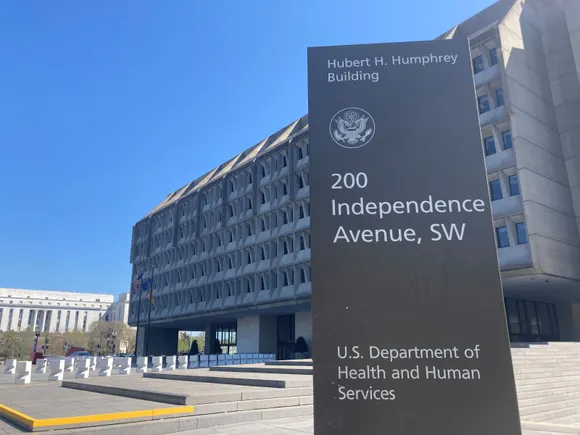


SAN FRANCISCO — With the close of J.P. Morgan Healthcare Conference, attention turns to next week’s inauguration of President-elect Donald Trump, and what his administration might mean for the Food and Drug Administration and the Department of Health and Human Services.
By and large, pharma executives and investors here are largely saying they remain confident in the stability of regulatory processes, despite headlines around the potential for disruption. Some aren’t expecting much to change if Marty Makary, a Johns Hopkins surgeon and Trump’s pick to run the FDA, is confirmed by the Senate.
“You might politically look at some of his views in question, but scientifically, people believe that he’s quite strong when he drives and makes decisions based on rational inputs,” said Andy Plump, president of R&D at Takeda Pharmaceuticals.
Even if Makary or Robert F. Kennedy Jr., who Trump’s named to lead HHS, were to place new scrutiny on the approval of vaccines or other drugs, there are checks in the overall system, said Chris Bardon, co-managing partner of life science investment firm MPM BioImpact.
“In most situations, political appointees don’t really change much,” Bardon said. “The people who are just doing their job every day, processing applications, reviewing data, working with companies? None of that’s going to change.”
Yet the FDA will be without a number of veteran leaders, including Namandjé Bumpus and Patrizia Cavazzoni, who have stepped down or announced plans to depart since Trump’s election.
Expect more details on Trump’s healthcare agenda in the coming weeks as the Senate vets both Kennedy and Makary. In the meantime, here are few other highlights from BioPharma Dive’s time covering the JPM meeting.
Where are the generalists?
Biotech’s winter could last well past the changing of the seasons this year, if you ask analysts at HSBC Innovation Banking. Though some in the industry are optimistic, others, HSBC among them, see headwinds from interest rates and the potential for regulatory instability from the Trump administration.
“Uncertainty always creates volatility, and volatility is not great for the public markets,” said Rebecca Stevenson, head of healthcare investment banking in the Americas for HSBC. “Ultimately the dust needs to settle before we see generalist [investors] back in. Is that happening in the next six months? Probably not.”
Analysts have pointed to the retreat of generalist investors, who park their funds across sectors, from biotech public offerings as one reason for depressed IPO performance.
“The only thing you could chase during the pandemic was healthcare so they’re all overindexed on healthcare,” Stevenson said. “They’ve got to get those positions down.”
For many to come back in, dealmaking needs to pick up and remain high. While HSBC views the pace of private market M&A as “solid,” deals for public companies were noticeably less last year. (J&J offered some respite on the latter front Monday, bidding nearly $15 billion to buy Intra-Cellular Therapies.)
Two factors have been at play, Stevenson said: Large-cap consolidation has seemed off the table under the Biden administration’s Federal Trade Commission, but also, there are relatively few assets with the commercial impact and revenue pharma companies look for to justify major deals.
Investors are also keeping an eye on geopolitical tensions, such as competition between the U.S. and China, and guidance on upcoming interest rate cuts. — Gwendolyn Wu
Explaining Lilly’s missed forecast
Eli Lilly disappointed investors hours before CEO David Ricks’ appearance at JPM, when it announced 2024 revenue that fell short of the financial guidance it gave Wall Street only months ago. Speaking to many of those investors Tuesday afternoon, Ricks outlined some of the reasons why.
Prescription growth for many chronic diseases is higher in December than in most other months, so Lilly assumed that would be the case with its GLP-1 drugs Mounjaro and Zepbound, which didn’t come true, Ricks said. That might have been because of how insurers handle new prescriptions, but the company doesn’t exactly know why. “Nonetheless, it happened, and we didn’t predict it,” he said.
Unpredictable decisions by distributors and wholesalers on how much supply to stock also played a role, he said. “The economics in our distribution channels aren’t great right now, and they’re really preserving their working capital,” Ricks said.
Those mistakes have helped Lilly better understand GLP-1 market dynamics, particularly in the relatively new obesity indication where Zepbound is prescribed.
“It’s our job to give good guidance to the street, and we aim to land within that guidance normally,” he said. “That said, I think we’re dealing with a business here that is pretty unprecedented in our sector in terms of size and scale and growth rate, and we’ve learned a few things.” — Jonathan Gardner
AbbVie reassessing psychiatry
AbbVie’s $8.7 billion purchase of Cerevel Therapeutics last year was a big bet om emraclidine, an experimental drug for schizophrenia designed in similar fashion to another Bristol Myers Squibb had acquired by buying Karuna Therapeutics.
While Karuna’s drug is now approved in the U.S. as Cobenfy, Cerevel’s unexpectedly fell short in two Phase 2 trials last November. The failure cost AbbVie billions of dollars in market value and left analysts stunned. Last week, AbbVie took a roughly $3.5 billion impairment charge to reflect the setback’s impact on its books.
The drug hasn’t been completely cast aside, AbbVie executives told investors at the JPM Wednesday. “We’re still studying it,” said CEO Robert Michael. “We still think emraclidine can play a role.”
However, the company appears to be rethinking the investment it commits to neuropsychiatry more broadly.
“Committing that much capital on early data, we’d certainly rethink that in psych,” said Michael. “That said, we weren’t the only party that was bidding for Cerevel. They saw the same thing we did.”
But AbbVie remains willing to take “calculated risks,” Michael added, citing the company’s track record in adding important assets like Skyrizi and Imbruvica through dealmaking. — Ned Pagliarulo
Novartis’ dealmaking plans
Novartis spent billions of dollars snapping up companies in 2023 and 2024, from radiopharmaceutical developer Mariana Oncology to Kate Therapeutics and its experimental gene therapies. The company will remain an active dealmaker in 2025, according to Fiona Marshall, Novartis’ president of biomedical research.
In an interview with BioPharma Dive Tuesday, Marshall said the pharmaceutical company is open to bringing in a variety of early-stage assets, even if its own R&D teams are developing their own versions or working on similar technology. It picked up Mariana, which had a radiopharma drug in development for small cell lung cancer, expanding a pipeline that already contained the radiopharma therapies Pluvicto and Lutathera.
“So often, it’s having our own program that makes us really like the project, and then if we see somebody else is doing it better than us externally, we’ll still bring that in,” she said.
Despite cooling interest in gene therapy due to persistent challenges, Novartis is still bullish on the field and on assets it acquired via deals for Kate as well as for DTx Pharma in 2023. — Gwendolyn Wu
Ben Fidler contributed reporting.