

Key takeaways
Australia’s property market isn’t just about affordability or investment; it’s influencing love, marriage, and family stability.
Rising housing costs can trap people in relationships, even unhappy ones, simply because they can’t afford to separate.
High property prices delay homeownership, marriage, family formation, and fertility decisions.
They also shape power dynamics within relationships.
Housing is no longer just about shelter, it’s quietly influencing Australia’s culture, wellbeing, and even who we choose to stay with.
Australia’s housing market isn’t just about affordability, wealth creation, or investment returns.
Believe it or not, it’s also quietly reshaping some of the most personal aspects of our lives: love, relationships, marriage, and family stability.
We’ve long discussed how demographics influence housing. But what’s less often recognised is how housing costs, in turn, influence our personal choices.
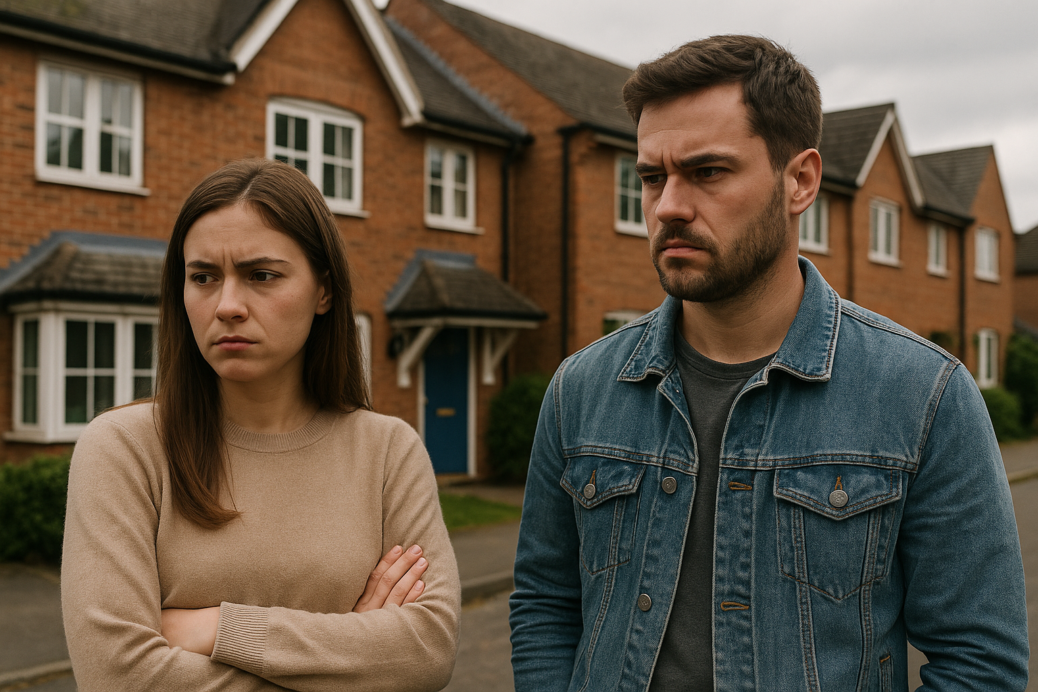
In fact, new research suggests that soaring house prices may be locking people into relationships, even unhappy ones, not because couples are more in love, but because they can’t afford to split up.
As demographer Simon Kuestenmacher explained in the latest episode of our Demographics Decoded podcast:
“The financial economic argument is rock solid. Divorce comes with obvious costs: lawyers, moving, and most significantly, running two households instead of one. Even if housing was cheap, two households cost more.”
In other words, the property market isn’t just about where we live. It’s influencing whether we stay together.
For weekly insights subscribe to the Demographics Decoded podcast, where we will continue to explore these trends and their implications in greater detail.
Subscribe now on your favourite Podcast player:
The economics of separation
While on paper, separating sounds simple: two people decide to go their own way, in practice, the costs quickly mount.
- Legal fees: Divorces involve lawyers, mediators, and paperwork, none of which are cheap.
- Moving expenses: Finding and furnishing another property comes with significant upfront costs.
- Running two households: Rent or mortgage repayments, utilities, internet, furniture, and even small things like buying another toaster or fridge.
These costs are manageable when housing is affordable.
But today, when median house prices are many multiples of income and rents are at record highs, doubling your housing needs can be financially crippling.
As Simon pointed out, “It is always cheaper to run one household than two. Even if the dwellings are smaller, the costs accumulate. It’s a massive disincentive to leave.”
This helps explain why Australia’s divorce rate has been steadily declining, now at its lowest level since no-fault divorce was introduced in 1976.
In big cities, Sydney, Melbourne, and Brisbane, where housing is most expensive, divorce rates are even lower.
Why now is different
Interestingly, this trend contrasts with what happened during previous periods of financial stress.
During the 1990s recession, divorce rates actually rose as household stress spilled into relationships.
We also saw a small uptick during the COVID-19 pandemic, when couples were forced into close quarters under stressful conditions.
So why are today’s high-cost times different?
It comes down to the type of stress.
A sudden crisis like COVID or a recession can push simmering tensions to breaking point. But today’s pressures, mortgages, rents, and day-to-day costs are long-term, structural challenges.
They don’t cause sudden fights; they quietly wear couples down.
Yet they also trap them, because leaving requires even more financial resources.
Later marriages, stronger unions, sometimes
Another factor in declining divorce rates is shifting demographics.
Australians are marrying later, often after years of cohabitation.
That means couples have already tested their relationship through multiple life stages before tying the knot.
Simon reflected on his own experience: “Sarah and I got married after we lived together for 14 years. By then, we’d lived through a gazillion crises. If it wasn’t working, we would have split earlier. So by the time we married, the foundations were solid.”
This trend means that fewer marriages happen, but those that do are generally stronger.
It also means people are more mature and self-aware when they marry, reducing the likelihood of impulsive choices that lead to regret.
Still, this doesn’t mean love is flourishing everywhere.
Many couples are together less because of affection and more because of economics.
The mental health trade-off
Staying together for financial reasons comes at a cost: well-being.
Census data consistently shows that the happiest people are those in stable, happy marriages.
Singles report lower average well-being, but the worst mental health outcomes come from those who are separated but not yet divorced.
Simon summarised it well:
“It is best to live in a happy marriage. But if your marriage isn’t working, it’s actually better for your mental health to break it up than to stay trapped.”
This suggests that while property prices may be lowering divorce rates, they may also be worsening mental health for those trapped in unhappy relationships.
Renting vs. owning: different pressures
The story looks a little different for renters.
Financially, separating is easier when you’re not tied to a mortgage; you simply end a lease and move out.
Renting also offers greater flexibility for those who anticipate lifestyle changes.
But here’s the catch: in tight rental markets, finding a new home isn’t easy.
A lack of supply can mean couples stay together longer than they’d like, simply because there’s nowhere else to go.
The gender shift in divorce economics
Historically, divorce tended to disadvantage women, who often had lower incomes and super balances.
Courts tried to compensate for this by adjusting asset splits in their favour.
But as Simon pointed out, this is changing:
“Women are outperforming men in education at every level, and in younger age brackets, they are already out-earning men. That means in 30 years, we may see the gender roles flip: men becoming the ones more disadvantaged in divorce.”
This reversal will reshape power dynamics within households and challenge long-held assumptions about financial vulnerability.
The bigger picture: housing as the silent influencer
This discussion is about more than relationships.
It highlights how deeply housing costs influence society.
High property prices don’t just delay homeownership.
They delay marriage, reshape family formation, influence fertility decisions, and even alter who has power in relationships.
Housing is quietly dictating who we love, how we live, and when we separate.
As Simon put it:
“Sooner or later, the housing angle pops up in almost every social issue. And usually, it’s in a disadvantageous way.”
Final thoughts
Choosing a life partner remains the most important decision we ever make; it shapes everything from our happiness to whether we have children.
But increasingly, that decision is being entangled with another: the housing market.
It’s a reminder that property is never just about bricks and mortar.
It’s about culture, relationships, and wellbeing.
As housing affordability continues to strain Australians, we’ll see more unintended consequences on the way we form and dissolve our most intimate bonds.
If you found this discussion helpful, don’t forget to subscribe to our podcast and share it with others who might benefit.
Subscribe now on your favourite Podcast player: