
range of most rapid radios
Many two-way radios have advertisements that claim “up to 36 miles” or more communication range. This can be misleading and is not realistic. The lower frequencies (AM, CB and HAM) can travel as ground waves that follow the contour of the Earth and can be received beyond the visual horizon. However, their signals can be blocked by obstacles like hills between the transmitter and receiver. The longer a radio antenna is the more it can pick up and transmit signals. However, that doesn’t mean the antenna can communicate over long distances by itself.
A major factor is a radio’s signal strength which depends on how much power it’s using. Most commercial and ham radios use around 10 or more watts which is a lot of energy to pass through obstacles. For CB radios and other HF frequencies that are found in marine, aviation and public safety radios, a big part of their range is their antenna height. A higher antenna can extend the radio’s horizon and make it easier to navigate. This is because the radio waves travel farther from the ground. To calculate this simply take the horizon at your location and multiply it by the height of your antenna. For example, if your antenna is 6 feet tall the horizon will be around 2.99 miles away. This makes communication more easy and is why it’s important to raise the antenna up high when possible.
The type of antenna used on a rapid radios can have an impact on range. Many handheld radios come with a stubby antenna that is more convenient to store, but reduces the radio’s range by up to 30%. Instead, look for a radio with a whip antenna. Generally, VHF signals can travel farther than UHF signals because they are less likely to be blocked by obstructions. However, if you will be using the radio in buildings or urban areas, or wooded areas with tall trees, then a UHF antenna may be better because it can more easily navigate around obstacles.
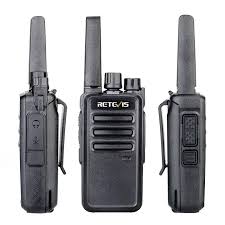
What’s the range of most rapid radios?
Loop antennas are ring-like antennas made out of segments of wire or tubing bent into a circle or polygon, or any other regular or irregular two-dimensional figure that closes in on itself. They are on rare occasions generically referred to as magnetic loops because they interact exclusively with the magnetic part of radio waves passing through them, rather than their electric part as linear antennas do.
Many things may impact the range of your radios such as the terrain, obstacles, physics and signal strength. These include: The power that the transmitter puts out, measured in watts. The higher the wattage, the better the signal strength and the farther it can reach. Sound and radio waves require a great deal of energy to travel long distances. In addition, they decay much faster over long distances than wired signals do.
For example, some manufacturers claim that their radios can communicate up to 36 miles with clear line of sight. This is possible, but it depends on a lot of things like being on the top of a mountain (which isn’t very common). The curvature of the Earth can also affect how far radio waves reach. In addition, other objects in the path such as walls can absorb or diffract radio waves or dissipate them. Some frequencies are less sensitive to this than others.
Radio waves are a form of complex energy that can behave in unexpected ways. This can mean that you might experience great range in one location but not in another. The S-Meter on your radio reflects the signal strength of the transmissions received. This is a logarithmic scale meaning that each increase or decrease in S-Meter reading represents a tenfold or a hundredfold change in actual signal strength.
Signals are often blocked by solid objects like buildings and cars. They also can be blocked by hills and mountains. Unlike microwaves that can penetrate metal, radio waves won’t pass through them. The claims some radio manufacturers make of “up to 36 miles” or more communication range are not based on real world results. These manufacturers are either lying or misrepresenting the product. The best way to find out the range of your Rapid Radios is to test them yourself and look at coverage maps. Then compare with other brands.