

Key takeaways
Despite living in one of the wealthiest countries, many hardworking Australians are financially struggling.
It’s not just numbers — it’s real and lived through rising grocery bills, rents, mortgage repayments, and quiet stress.
To be in the top 1%, you need to earn over $375,000; median income is around $65,000.
Although unemployment is “low,” underemployment and job insecurity persist.
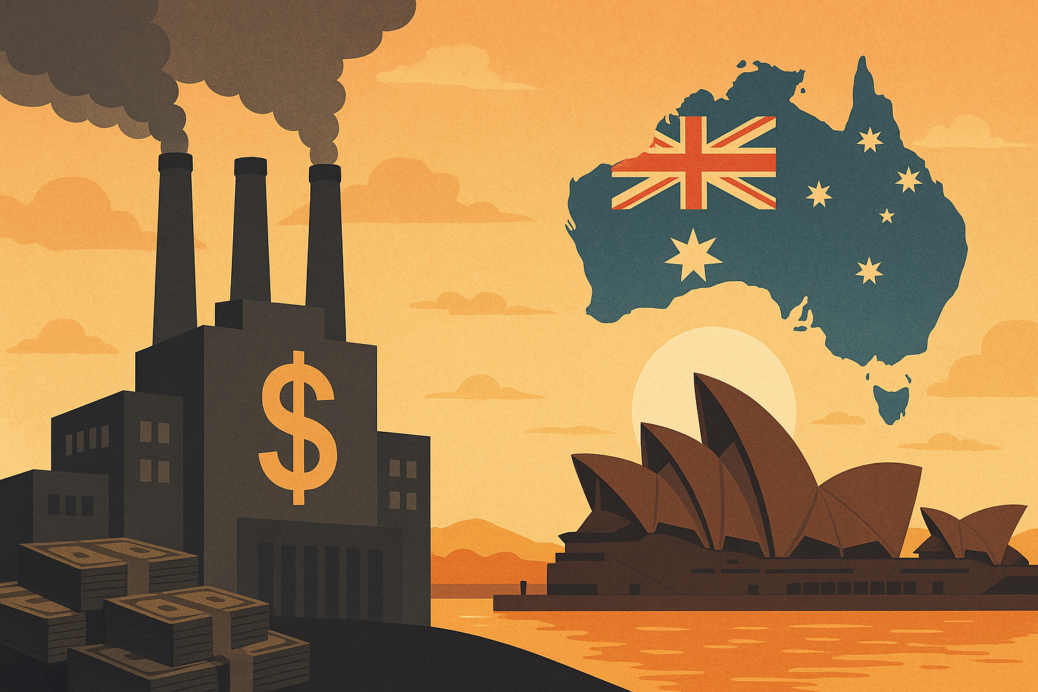
Global wealth is flowing into Australia, especially Sydney, where over 140,000 millionaires are pushing up property prices — making it harder for first-home buyers.
Why is it that in one of the wealthiest countries on earth, so many hardworking Australians feel like they’re falling behind?
You don’t need economic charts to know something’s changed – you can feel it in your weekly grocery bill, your rent, your mortgage, and your quiet financial stress.
Is capitalism broken – or is it just rewarding those who play the long game while punishing those waiting for a shortcut?
That’s a question I hear a lot lately – is capitalism, the very system that created so much prosperity for many Australians, starting to work against us?
Or are we simply in the middle of a transition that feels uncomfortable?
Look, there’s no denying the challenges.
Grocery bills sting, rents are soaring, and the dream of homeownership feels like it’s slipping further away for many Australians.
It’s easy to think the game is rigged when some people are effortlessly buying multi-million-dollar properties while others are counting every dollar at the supermarket checkout.
But let’s take a step back.
Yes, inequality is growing
It’s true. The gap between the haves and have-nots has widened.
To crack into the top 1%, you’ll need to earn upwards of $375,000 a year, while the median Australian income, which represents the middle point of all incomes, is around $65,000 per year.
And while our official unemployment rate looks healthy at 4.3%, underemployment and job insecurity paint a murkier picture.
Add to that Australia’s magnetism for global wealth.
We’re attracting ultra-high-net-worth individuals in droves.
Sydney alone now boasts over 140,000 millionaires, and their property purchases often set new benchmarks for price growth.
This is putting further pressure on first-home buyers and investors alike.
Why does it feel so hard?
Not long ago, a single income was enough to buy a home, raise kids, and take regular holidays.
Fast forward to today, and even households earning six figures often feel stretched.
Inflation has eroded purchasing power, and “normal” life now includes things that were luxuries for previous generations—private schools, SUVs, overseas trips.
It’s also cultural.
We’ve been sold a vision of success defined by consumption, and many Australians are running harder on the treadmill to keep up.
Is capitalism broken or just changing?
Some argue we’re seeing late-stage capitalism, where wealth and opportunity are concentrated at the top.
But capitalism isn’t static. It has evolved before and will do so again.
Governments and societies recalibrate systems when enough pressure builds.
But waiting for systemic change is a risky strategy.
The reality is, no matter how imperfect the system, individuals who take ownership of their financial future tend to outperform those who wait for the rules to change.
So what can you do?
Here’s the good news: Australia is still a land of opportunity if you approach it strategically.
Property has long been the vehicle of choice for building wealth, not because it’s easy, but because it’s proven.
This isn’t about quick wins. It’s about:
- Having a clear, realistic financial plan.
- Practicing delayed gratification (yes, that means saying no to some of today’s wants for tomorrow’s financial security). Do the hard things now you’ll have an easy life later, but if you do the easy things now you’ll have a harder life later.
- Seeking guidance from experts who can help you navigate the complexities of the market.
Start small if you must. The point is to start.
With discipline and the right mindset, property can shift you from financial survival mode to a position of strength.
The Disneyland analogy
Life often feels like Disneyland: hours spent in line for a fleeting thrill.
The wealthy have “Lightning Lane” passes, but even they aren’t guaranteed satisfaction.
Property, however, isn’t a two-minute ride—it’s a long game with the potential to transform your financial life if played well.
The bottom line: Australia is still the lucky country
Yes, there’s inequality. Yes, things feel harder.
But we are living in the best country on earth at the best time in history.
Opportunity hasn’t vanished. It just requires a new level of awareness, discipline, and strategy to seize it.
The system isn’t perfect, but you don’t need perfection to succeed.
What you need is a plan, patience, and the ability to see past today’s headlines.
Real estate has helped countless Australians achieve financial independence. With the right approach, it can help you too.
The window is still open—but it won’t stay open forever.
Why now is a window of opportunity for strategic property investors
I believe we’re in a window of opportunity for property investors who take a long-term view.
Right now, we’re seeing what some would call a “perfect storm” of fundamentals that are aligning to support strong property markets in the years ahead:
- Continued rapid population growth is putting pressure on housing.
- An acute undersupply of dwellings,
- A chronic shortage of skilled labour, making new development slower and more expensive.
- Inflation has moderated, now sitting within the RBA’s target range.
- Interest rates will keep falling, bringing more buyers into the market
- Government first homebuyer incentives will pour fuel on the flames of our undersupplied housing market.
As interest rates keep falling and confidence returns among both buyers and sellers, we’ll enter the next phase of the property cycle.
And historically, this stage has delivered some of the best capital growth for those who act early.
To be clear, I’m not suggesting anyone try to “time the market”—that’s near impossible to get right consistently.
However, many successful investors built significant wealth by buying during the early stages of an upturn, when fear still lingered and competition was low.
Looking ahead, demand will continue exceeding supply for the foreseeable future. Strong immigration, restrictive planning regulations, and the slow delivery of new housing stock will keep upward pressure on prices.
Meanwhile, the cost to deliver new dwellings is rising and will continue to rise.
It’s not just supply chain issues or labour shortages—it’s also financial viability. Developers won’t launch projects unless the numbers stack up, and right now, that means new stock will need to enter the market at significantly higher prices than existing homes.
Eventually, as interest rates ease further and media headlines turn positive, consumer sentiment will rebound.
Pent-up demand will be unleashed. And just as it always does, greed (FOMO) will overtake fear (FOBE – Fear of Buying Early) as the cycle kicks into gear.
So if you’re in a financially stable position and thinking of buying your next home or investment property—this may be your moment.
Because in property, like in life, you don’t get rewarded for waiting. You get rewarded for acting with clarity while others are uncertain.
Fact is, the smart money is already on the move.
But what about you?
Are you clear on how to take advantage of these market conditions — or are you still waiting for “certainty”?
That’s where our Complimentary Wealth Discovery Session comes in. We’re offering you a 1-on-1 chat with a Metropole Wealth Strategist to help you:
- Clarify your financial goals
- Understand how macro trends affect your position
- Build a personalised, data-driven property strategy
- Get ahead of the curve — before everyone else piles in
There’s no cost, no obligation — just practical, tailored guidance based on decades of experience.
Click here now to book your free Wealth Discovery Session